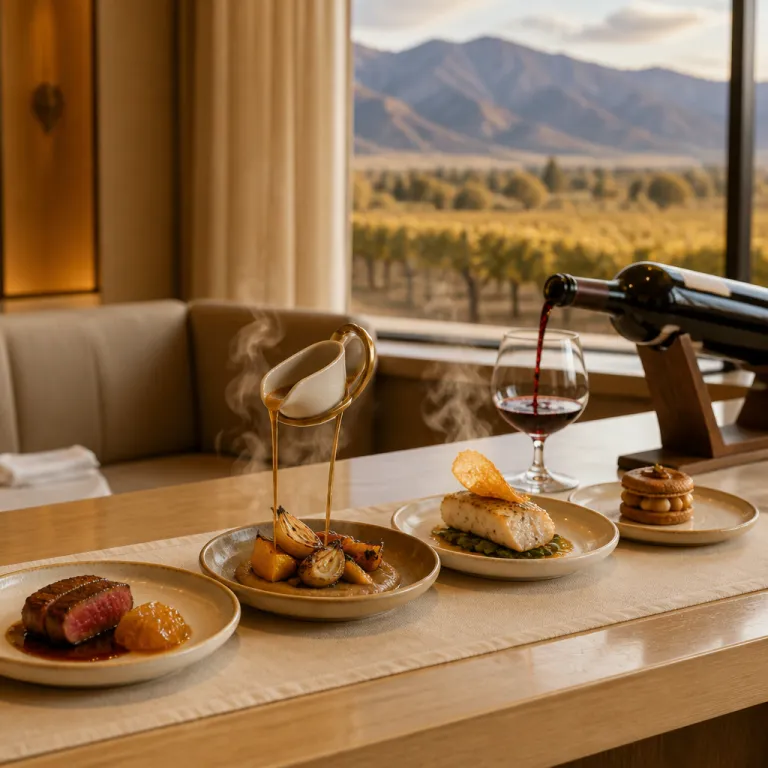
Michelin restaurants in Argentina reshape luxury travel itineraries
The first dedicated Michelin Guide to Argentina, covering Buenos Aires and Mendoza, has quietly redrawn the country’s gastronomic hierarchy. Released in November 2023 as a digital-only edition, the Michelin Guide Buenos Aires & Mendoza 2024 now lists 14 stars shared between the capital and the wine region. High-end travelers are rethinking where they book hotels, how long they stay in each city, and even which neighborhoods make the most sense. The absence of a gala ceremony underlines how substance now matters more than spectacle.
Inspectors for the Michelin Guide confirmed that “the number of restaurants with stars has already reached 14 in the Michelin Guide Buenos Aires & Mendoza 2024,” according to the official announcement on the Guide Michelin website. That tally includes Aramburu in Buenos Aires, currently Argentina’s only two-star restaurant and a reference point for contemporary tasting-menu cuisine in South America. For guests choosing hotels in the capital, proximity to this address and to the new one-star Han in Palermo now helps define the most strategic areas to stay.
Han brings Korean flavors into the Argentine fine-dining landscape, pairing kimchi brightness with grass-fed beef and a focused wine list. Its single star places it among a compact group of Michelin-awarded restaurants in Buenos Aires, where five stars in total contrast sharply with Mendoza’s nine. For business travelers extending a stay in the city, choosing hotels in Recoleta, Retiro or Palermo allows easy access to both Aramburu and Han, while still keeping meetings in the downtown grid within a 15–20 minute ride.
Across the country, the guide now reads like a map of where serious gastronomes should sleep. The concentration of Michelin stars in Mendoza means that top-tier dining is no longer the sole preserve of the capital’s dining rooms. For readers in the United States and other international markets across the Americas, this shift makes a split itinerary between city and vineyards more compelling than a single-city stay focused only on Buenos Aires.
The current list of Michelin-starred restaurants also signals how Argentine cuisine is being judged alongside peers in Asia, Mexico and the broader Americas. While the country still awaits its first three-star establishment, the spread of one- and two-star venues already places Argentina firmly on the international fine-dining circuit. For hotel bookers, that means aligning reservations with the most coveted tables rather than simply following traditional tourist routes.
Because this edition is digital only, the Guide Michelin interface has become the primary planning tool for many of our readers. It allows quick comparison of starred restaurants, Bib Gourmand listings and other recommended establishments in Buenos Aires and Mendoza. When you overlay that data with premium hotels on a map, the new dining geography of Argentina becomes immediately clear.
Practical planning tips for 2024
For peak-season visits (November to March), reserve Michelin-starred restaurants at least three to four weeks in advance and secure hotel bookings on flexible rates that allow for date shifts if you land a last-minute table. Use Bib Gourmand addresses for relaxed lunches or casual dinners on nights without tasting menus, and treat starred restaurants as anchors around which you structure both your hotel choice and daily schedule.
For travelers already familiar with Buenos Aires, our editorial team recommends reading about refined festive stays in the capital through this guide to a luminous summer holiday in Buenos Aires: luxury Christmas stays in Buenos Aires. Combining that perspective with the latest Michelin selection helps you decide how many nights to allocate to the city before flying west to the vineyards. The result is a more deliberate, gastronomy-led itinerary that respects both your time and your palate.
Mendoza’s winery restaurants and the rise of vineyard based gastronomy
Mendoza’s Michelin momentum has transformed the region from a classic wine day trip into a fully fledged gastronomic destination. The guide currently counts nine stars in the province, compared with five in Buenos Aires, and five of those stars sit inside winery restaurants. For luxury hotel guests, that concentration means the choice of vineyard or village base now shapes how many acclaimed dining rooms you can realistically reach in a three- or four-night stay.
The most striking pattern in the Argentine selection is the dominance of winery-based establishments. Angélica Cocina Maestra at Catena Zapata, Casa Vigil, Riccitelli Bistró, Zonda Cocina de Paisaje at Bodega Lagarde and La VidA at Susana Balbo Winemaker’s House & Spa Suites all hold one Michelin star. These restaurants define a new Mendoza model where wine, cocina and landscape merge into a single high-luxury experience.
La VidA is particularly relevant for hotel bookers because it sits inside a small, design-forward property in Chacras de Coria. Guests staying at Susana Balbo Winemaker’s House & Spa Suites effectively sleep above a Michelin-starred dining room, with the vineyards of Luján de Cuyo and the Uco Valley within easy reach. For travelers focused on restaurants across Mendoza, this kind of integrated hotel-and-restaurant concept reduces transfers and maximizes time at the table.
Three newer one-star restaurants in the province anchor the current shift. Cal, located at Matías Michelini’s Sitio La Estocada estate in the Uco Valley, brings a landscape-driven approach to contemporary cuisine that pairs altitude wines with precise, produce-led plates. Centauro, in central Mendoza city, and La VidA in Chacras de Coria round out the trio, giving the region a more balanced mix of urban and rural starred addresses.
The latest update also highlights how Mendoza’s cocina now competes with leading vineyard regions in the Americas and beyond. When you compare the restaurants Mendoza offers with winery dining in the United States or Mexico, the value proposition is striking, especially once you factor in Argentina’s wine pricing. For international guests, that means a longer stay in Mendoza corridors such as Luján de Cuyo and the Uco Valley delivers exceptional return on both time and budget.
Casa Vigil, in particular, has become a pilgrimage site for oenophiles who follow the Guide Michelin closely. Its one star confirms what wine insiders have long argued about the depth of its cellar and the creativity of its cocina. Booking a nearby hotel in Luján de Cuyo allows you to pair a long lunch there with a dinner at another Michelin-starred restaurant without long night drives back to the city.
Where to stay in Mendoza in 2024
For a three-night gourmet stay, consider one night in Mendoza city for Centauro and two nights in either Luján de Cuyo or the Uco Valley to reach winery restaurants with minimal driving. Boutique vineyard lodges and spa resorts often include breakfast and sometimes a winery tour in the nightly rate, so compare inclusions rather than headline prices when booking.
For travelers who like to balance vineyard time with cultural immersion, our feature on cultural hotels in Argentina’s provinces offers a useful complement to the Michelin list. It highlights properties in Mendoza and beyond where architecture, art and service standards match the ambition of the region’s best restaurants. Aligning those hotels with the current stars creates a coherent, high-impact itinerary across Argentina.
Buenos Aires gems and how Michelin changes hotel strategy
Buenos Aires remains Argentina’s most complex urban stage, and the new Michelin selection sharpens how luxury travelers navigate it. With Aramburu holding two stars and Han joining the roster of one-star establishments, the capital now offers a compact but potent cluster of high-end dining rooms. The key for hotel bookers is to map those restaurants against neighborhoods that also work for business meetings and cultural exploration.
Aramburu’s two-star status makes it the country’s most scrutinized restaurant, and its tasting menu has become a benchmark for contemporary cuisine in Latin America. For executives flying in from the United States or Asia, staying in a central Recoleta or Retiro hotel keeps both the restaurant and the city’s main business district within a short car ride. That balance between gastronomy and practicality now defines the luxury standard in Buenos Aires.
Han, as Argentina’s first Korean cuisine restaurant with a Michelin star, adds a different flavor profile to the city’s dining map. Located in a more residential part of Palermo, it rewards guests who choose hotels in that neighborhood or nearby districts that blend leafy streets with strong nightlife. For travelers planning around the current guide, a split stay between a classic central property and a more relaxed Palermo address can make sense.
The guide also influences how long travelers remain in the capital before heading west to Mendoza. With only five stars in Buenos Aires compared with nine in the wine region, many readers now allocate two or three nights to the city and at least three nights to the vineyards. That shift reflects a broader trend where restaurants across Argentina are evaluated not just on urban sophistication but on how they express terroir and regional identity.
While the current guide focuses on Buenos Aires and Mendoza, its methodology mirrors how Michelin operates in Mexico, the United States and parts of Asia. Anonymous inspectors apply the same criteria to every restaurant, whether it is a formal dining room in the capital or a vineyard terrace in the Andes foothills. For travelers used to reading the Michelin Guide in other countries, that consistency builds trust when choosing where to eat and, by extension, where to stay.
Some readers ask whether Bib Gourmand selections in Buenos Aires matter as much as starred restaurants when planning hotel locations. The answer is yes, particularly if you enjoy more casual, wine-friendly evenings after long workdays. A hotel positioned between starred restaurants and Bib Gourmand bistros allows you to move fluidly between formal and relaxed dining without sacrificing sleep or meeting schedules.
For those considering extending a business trip into a longer Argentine journey, our report on a week on an Argentine estancia shows how rural stays can complement city and vineyard time. Combining an estancia with nights in Buenos Aires and Mendoza lets you experience the full spectrum of Argentine hospitality, from asado cooked by a gaucho to a multi-course menu at a Michelin-starred restaurant. The Michelin framework then becomes one layer in a broader travel strategy rather than the only filter.
Looking ahead, the balance between Buenos Aires and Mendoza in future editions of the guide will continue to influence hotel development and renovation priorities. Properties near clusters of Michelin stars and Bib Gourmand addresses are already seeing stronger demand from gastronomic travelers. For our readers, staying attuned to how the guide evolves is now as essential as tracking new hotel openings when planning high-end trips to Argentina.